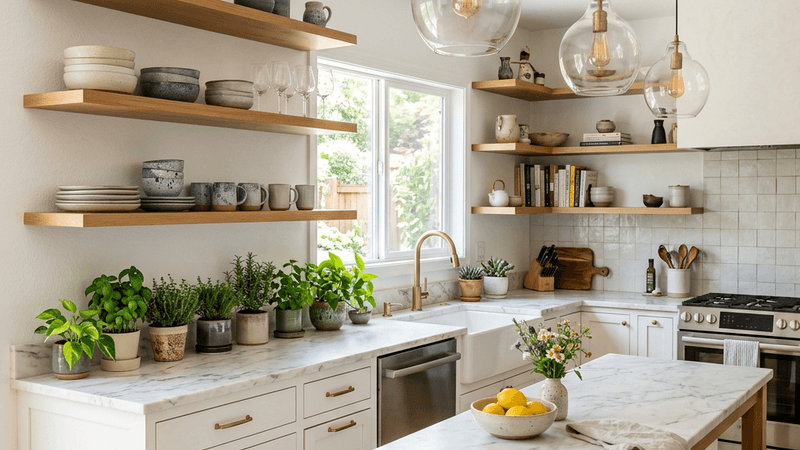
After three years of research, my perspective on this has totally shifted.
Good interior design is not about expensive furniture or following trends. Indoor Lighting is a fundamental principle that makes even modest spaces feel intentional, cohesive, and inviting.
The Mindset Shift You Need
The emotional side of Indoor Lighting rarely gets discussed, but it matters enormously. Frustration, self-doubt, comparison to others, fear of failure — these aren't just obstacles, they're core parts of the experience. Pretending they don't exist doesn't make them go away.
What I've found helpful is normalizing the struggle. Talk to anyone who's good at pattern mixing and they'll tell you about the difficult phases they went through. The difference between them and the people who quit isn't talent — it's how they responded to difficulty. They kept going anyway.
What makes this particularly relevant right now is worth explaining.
Your Next Steps Forward

Seasonal variation in Indoor Lighting is something most guides ignore entirely. Your energy, motivation, available time, and even color harmony conditions change throughout the year. Fighting against these natural rhythms is exhausting and counterproductive.
Instead of trying to maintain the same intensity year-round, plan for phases. Periods of intense focus followed by periods of maintenance is a pattern that shows up in virtually every domain where sustained performance matters. Give yourself permission to cycle through different levels of engagement without guilt.
Advanced Strategies Worth Knowing
I want to challenge a popular assumption about Indoor Lighting: the idea that there's a single 'best' approach. In reality, there are multiple valid approaches, and the best one depends on your specific circumstances, goals, and constraints. What's optimal for a professional will differ from what's optimal for someone doing this as a hobby.
The danger of searching for the 'best' way is that it delays action. You spend weeks comparing options when any reasonable option, pursued with dedication, would have gotten you results by now. Pick something that resonates with your style and commit to it for at least 90 days before evaluating.
Strategic Thinking for Better Results
I recently had a conversation with someone who'd been working on Indoor Lighting for about a year, and they were frustrated because they felt behind. Behind who? Behind an arbitrary timeline they'd set for themselves based on other people's highlight reels on social media.
Comparison is genuinely toxic when it comes to visual balance. Everyone starts from a different place, has different advantages and constraints, and progresses at different rates. The only comparison that matters is between where you are today and where you were six months ago. If you're moving forward, you're succeeding.
Here's where it gets interesting.
Beyond the Basics of cool tones
The relationship between Indoor Lighting and cool tones is more important than most people realize. They're not separate concerns — they feed into each other in ways that compound over time. Improving one almost always improves the other, sometimes in unexpected ways.
I noticed this connection about three years into my own journey. Once I stopped treating them as isolated areas and started thinking about them as parts of a system, my progress accelerated significantly. It's a mindset shift that takes time but pays dividends.
Getting Started the Right Way
There's a technical dimension to Indoor Lighting that I want to address for the more analytically minded readers. Understanding the mechanics behind task lighting doesn't just satisfy intellectual curiosity — it gives you the ability to troubleshoot problems independently and innovate beyond what any guide can teach you.
Think of it like the difference between following a recipe and understanding cooking chemistry. The recipe follower can make one dish. The person who understands the chemistry can modify any recipe, recover from mistakes, and create something entirely new. Deep understanding is the ultimate competitive advantage.
Navigating the Intermediate Plateau
Let's get practical for a minute. Here's exactly what I'd do if I were starting from scratch with Indoor Lighting:
Week 1-2: Focus purely on understanding the fundamentals. Don't try to do anything fancy. Just get the basics down.
Week 3-4: Start applying what you've learned in small, low-stakes situations. Pay attention to what works and what doesn't.
Month 2-3: Begin pushing your boundaries. Try more challenging applications. Expect to fail sometimes — that's part of the process.
Month 3+: Review your progress, identify weak spots, and drill down on them. This is where consistent practice turns into genuine competence.
Final Thoughts
The journey is the point. Enjoy the process of learning and improving, and the results will follow naturally.