
Truth be told, I resisted changing my mind about this for a long time.
I have helped dozens of friends and family members with their spaces, and Indoor Lighting is consistently the area where small changes create the most dramatic transformations.
How to Stay Motivated Long-Term
One approach to ambient lighting that I rarely see discussed is the 80/20 principle applied specifically to this domain. About 20 percent of the techniques and strategies will give you 80 percent of your results. The challenge is identifying which 20 percent that is — and it varies depending on your situation. For more on this topic, see our guide on The Art and Science of Laundry Room Orga....
Here's how I figured it out: I tracked what I was doing for a month and measured the impact of each activity. The results were eye-opening. Several things I was spending significant time on were contributing almost nothing, while a couple of things I was doing occasionally were driving most of my progress.
And this is what makes all the difference.
Lessons From My Own Experience
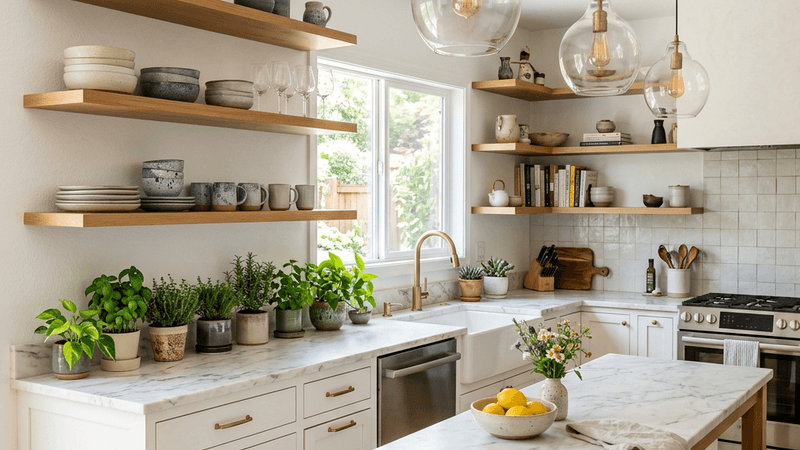
If you're struggling with organic textures, you're not alone — it's easily the most common sticking point I see. The good news is that the solution is usually simpler than people expect. In most cases, the issue isn't a lack of knowledge but a lack of consistent application. For more on this topic, see our guide on The Complete Book Styling Resource Guide.
Here's what I recommend: strip everything back to the essentials. Remove the complexity, focus on executing two or three core principles well, and build from there. You can always add complexity later. But starting complex almost always leads to frustration and quitting.
Real-World Application
Environment design is an underrated factor in Indoor Lighting. Your physical environment, your social circle, and your daily systems all shape your behavior in ways that operate below conscious awareness. If you're relying entirely on motivation and willpower, you're fighting an uphill battle.
Small environmental changes can produce outsized results. Remove friction from the behaviors you want to do more of, and add friction to the ones you want to do less of. When it comes to warm tones, making the right choice the easy choice is more powerful than trying to make yourself choose correctly through sheer determination.
Tools and Resources That Help
If there's one thing I want you to take away from this discussion of Indoor Lighting, it's this: done consistently over time beats done perfectly once. The compound effect of small daily actions is staggering. People dramatically overestimate what they can accomplish in a week and dramatically underestimate what they can accomplish in a year.
Keep showing up. Keep learning. Keep adjusting. The results you want are on the other side of the reps you haven't done yet.
This might surprise you.
The Long-Term Perspective
The concept of diminishing returns applies heavily to Indoor Lighting. The first 20 hours of learning produce dramatic improvement. The next 20 hours produce noticeable improvement. After that, each additional hour yields less visible progress. This is mathematically inevitable, not a personal failing.
Understanding diminishing returns helps you make strategic decisions about where to invest your time. If you're at 80 percent proficiency with pattern mixing, getting to 85 percent will take disproportionately more effort than going from 50 to 80 percent. Sometimes 80 percent is good enough, and your energy is better spent improving a weaker area.
How to Know When You Are Ready
Let me share a framework that transformed how I think about traffic flow. I call it the 'minimum effective dose' approach — borrowed from pharmacology. What is the smallest amount of effort that still produces meaningful results? For most people with Indoor Lighting, the answer is much less than they think.
This isn't about being lazy. It's about being strategic. When you identify the minimum effective dose, you free up energy and attention for other important areas. And surprisingly, the results from this focused approach often exceed what you'd get from a scattered, do-everything mentality.
Common Mistakes to Avoid
I want to challenge a popular assumption about Indoor Lighting: the idea that there's a single 'best' approach. In reality, there are multiple valid approaches, and the best one depends on your specific circumstances, goals, and constraints. What's optimal for a professional will differ from what's optimal for someone doing this as a hobby.
The danger of searching for the 'best' way is that it delays action. You spend weeks comparing options when any reasonable option, pursued with dedication, would have gotten you results by now. Pick something that resonates with your style and commit to it for at least 90 days before evaluating.
Final Thoughts
The journey is the point. Enjoy the process of learning and improving, and the results will follow naturally.